No one would conventionally have the impression that Easter, whether Western rite or Eastern rite, could be commuted to the day after 9/11 but ... an Easter party will be under way ... in a few hours now. Where?
https://thetrinitychurch.com/easter-in-september-pastor-mark/
https://thetrinitychurch.com/easter-in-september/
Saturday, September 12, 2020


Theopolis Institute conversation on secularity and the problem of church music ... I'm not sure the problem of traditional vs vernacular is a problem of secularity as much as its a challenge of high liturgical white guys not being sure how to get the music of low liturgical POC to fit into their traditions
First I'll load up the relevant links and then, assuming you've read the whole conversation, I'll proceed with some thoughts about it after the break:
https://theopolisinstitute.com/conversations/secularity-and-the-problem-of-church-music/
https://theopolisinstitute.com/conversations/catholic-music/
https://theopolisinstitute.com/conversations/hold-to-the-old/
https://theopolisinstitute.com/conversations/traditional-contemporary-and-the-psalms/
https://theopolisinstitute.com/conversations/a-winsome-inequality/
https://theopolisinstitute.com/conversations/moving-past-musical-dystopia/
https://theopolisinstitute.com/conversations/secularity-and-the-problem-of-church-music/
https://theopolisinstitute.com/conversations/catholic-music/
https://theopolisinstitute.com/conversations/hold-to-the-old/
https://theopolisinstitute.com/conversations/traditional-contemporary-and-the-psalms/
https://theopolisinstitute.com/conversations/a-winsome-inequality/
https://theopolisinstitute.com/conversations/moving-past-musical-dystopia/
Doug Shadle has mentioned the Beethoven problem in US; Madeline Sayet essays the Shakespeare problem in US theater
In his book Orchestrating the Nation, Douglas Shadle described the "Beethoven problem" that American symphonists faced. The core of the double bind presented by critical reception history could be summed up as follows: 1) if you wrote an American symphony that did not aim to sound like Beethoven then the music you wrote was frivolous and unworthy of being considered a serious contribution to the art of music, however 2) if you wrote an American symphony that did aim to invoke the influence of Beethoven then you were found wanting in comparison to the great master and didn't trust in relying on American inspirations.
Beethoven's canonical status in nineteenth century music and the evolution of what Mark Evan Bonds has recently called The Beethoven Syndrome meant music was heard as a direct expression of the personal feelings of a great soul and so on (I'm starting into said book). Well, a comparable canonization process happened for William Shakespeare and so it's no surprise that American indigenous theater in all possible variations of the concept has found the cult of the Bard as repressive as American symphonists and at least some music educators have found the cult of Beethoven.
https://howlround.com/interrogating-shakespeare-system
Beethoven's canonical status in nineteenth century music and the evolution of what Mark Evan Bonds has recently called The Beethoven Syndrome meant music was heard as a direct expression of the personal feelings of a great soul and so on (I'm starting into said book). Well, a comparable canonization process happened for William Shakespeare and so it's no surprise that American indigenous theater in all possible variations of the concept has found the cult of the Bard as repressive as American symphonists and at least some music educators have found the cult of Beethoven.
https://howlround.com/interrogating-shakespeare-system
Wednesday, September 09, 2020
Doug Wilson lets his base know that if Biden wins the old America is gone, gone for good, and that conservatives will need to learn how to think of their government as fundamentally illegitimate
There is a tone in blogging somewhere between preening snark and self-pitying apocalyptic that permeates punditry across the political spectrum from left to progressive to liberal to centrist to libertarian to social conservative to reactionary in the age of an internet that, if a person, could easily order a glass of gin. It's the era of the "both sides" response to observations made and an era of roughly the same level of bad faith regarding public polemic and invocations of eschatological terror on behalf of the American republic.
We've "been here before" but we weren't tweeting so much about it, so social media makes the recurrent cycle of apocalyptic fury and eschatological panic easier to witness and produce. Worries that the executive would suspend the Constitution; declare martial law by invoking emergency powers; and then self-select lifelong dictatorship have been expressed for decades. I know people who thought Bill Clinton was going to do it; that W was going to do it; that Obama was going to send Christians to concentration camps and replace the dollar with the amero; and now we anticipate another scenario where the prospect of accepting the legitimacy of the forthcoming electoral outcome is dicey as it's been in the last twenty years with respect to party balkanization, but with a newer and more frenetic sense of eschatological dread on behalf of the United States as a republic.
Which is how we get to Doug Wilson being, well, Doug Wilson ... talking about politics when people who pay attention to him got a sense that he said somewhere he would stop doing that.
of course they threw a Pinkfloyd song into the Dune trailer, since the band was to write the soundtrack for Alejandro Jodorowsky's Dune film that never was
Most Pinkfloyd fans ought to know this by 2020, but the Pinkfloyd nod was one of many expectable elements to the trailer.
https://www.youtube.com/watch?v=n9xhJrPXop4
https://www.youtube.com/watch?v=n9xhJrPXop4
Tuesday, September 08, 2020
and turning back to news in animation, The Venture Bros is cancelled
While for reasons I can't quite understand, Rick & Morty has been one of the most praised shows on Adult Swim, the show I enjoyed more has just gotten cancelled.
https://www.vanityfair.com/hollywood/2020/09/venture-bros-canceled-season-8
https://io9.gizmodo.com/the-venture-bros-has-been-unceremoniously-cancelled-1844982948
It's not that I can't enjoy episodes of Rick & Morty. It has had some fantastic moments, like the episode "Lawnmower Dog". But as animated shows with adult themes revolving around parenthood and amoral scientists who may or may not be successful as scientists but are nearly complete failures at being ethical, well-socialized human beings, Venture Bros was mining those themes as far back as 2003, well before Rick & Morty was ever on the air.
https://www.vanityfair.com/hollywood/2020/09/venture-bros-canceled-season-8
https://io9.gizmodo.com/the-venture-bros-has-been-unceremoniously-cancelled-1844982948
It's not that I can't enjoy episodes of Rick & Morty. It has had some fantastic moments, like the episode "Lawnmower Dog". But as animated shows with adult themes revolving around parenthood and amoral scientists who may or may not be successful as scientists but are nearly complete failures at being ethical, well-socialized human beings, Venture Bros was mining those themes as far back as 2003, well before Rick & Morty was ever on the air.
Norman Lebrecht on the loss of personality in contemporary violinists, the fault lies with the nature of music education, of course, and the nature of the industries
It is not really a surprise if an older music critic concludes that kids these days have no personality compared to the old greats. It's been happening in rock music and jazz criticism and it would, of course, be expected in classical music criticism. Thus ...
https://slippedisc.com/2020/09/why-do-most-violinists-now-sound-the-same/
https://slippedisc.com/2020/09/why-do-most-violinists-now-sound-the-same/
https://thecritic.co.uk/a-worthy-heiress-to-princess-ida/...
The kaleidoscopic art of violin playing had lost its flavour, like chewing-gum, in the pop song, on the bedpost overnight.
It was not hard to see why. There were two nurseries for violinists — the Russian, which turned out competition winners whom nobody wanted to hear again, and the American, which ran a conveyor belt from Dorothy DeLay’s teaching room at Juilliard to Isaac Stern’s secretary’s agency across the road.
...
Saturday, September 05, 2020
links for the weekend, somewhat Atlanticist ruminations at The Atlantic on the demise of the US and New York; the dour path artists face; and the racist nature of the 19th century symphonic canon
A few links for the weekend, starting with stuff from The Atlantic, as is so often the case:
since 2019, an official 180 degree turn from Mark Driscoll on interpreting Genesis 6:1-4 ... so he's caught up to the last thirty years of Enochic scholarship but ... why would Satan try to replicate the Incarnation before it happened?
A year and a half ago Driscoll publicly did a 180 on his take on Genesis 6:1-4. So he does change his views, and has been, for those who have mistakenly still referred to him as a Calvinist when he's said the TULIP is garbage (although the TULIP itself is more recent than many non-Calvinists might realize). So ... Genesis 6:1-4 can now be thought of as referring to precisely the angelic-human hybrids that Driscoll said couldn't be what Genesis was referring to in the Mars Hill Genesis series circa 2004-2005:
https://www.facebook.com/pastormark/videos/does-genesis-6-teach-that-aliens-mated-with-women-and-created-a-super-race/591300321339707/
https://www.youtube.com/watch?v=9EMwsjyL9ow
https://www.facebook.com/pastormark/videos/does-genesis-6-teach-that-aliens-mated-with-women-and-created-a-super-race/591300321339707/
https://www.youtube.com/watch?v=9EMwsjyL9ow
Friday, September 04, 2020
an era of not fact-checking non-fiction books ...
In light of years past where documenting citation failures was part of what happened at this blog, alongside keeping track of factual errors in some books ... these recent articles are not really surprising. Disappointing ... but not surprising.
https://www.theatlantic.com/entertainment/archive/2014/09/why-books-still-arent-fact-checked/378789/
thematically ... this unfortunately seems of a piece with a book I picked up that I read about on Jim West's blog ... the con around the fabricated Gospel of Jesus' Wife
Dusan Bogdanovic: Danse et Fugue for solo guitar
https://www.youtube.com/watch?v=fZZhl3ZBCOY
Still meaning to write about the Bogdanovic Guitar Sonatas 1 through 4 but that will take time to even start setting up. Meanwhile, here's a fun short dance and fugue for guitar.
Still meaning to write about the Bogdanovic Guitar Sonatas 1 through 4 but that will take time to even start setting up. Meanwhile, here's a fun short dance and fugue for guitar.
Tuesday, September 01, 2020
Joseph Horowitz: Don't tell aspiring young musicians orchestras are better than ever, tangential link to Thomas Ades premiere via LSO having no one attending
Joseph Horowitz has posted about things to not tell aspiring young musicians about the state of contemporary orchestras and orchestral life in the United States. What sticks with me, as a guitarist, is an axiom shared long ago about what the orchestras was (or is?) supposed to represent, which may shed some light on contemporary arguments against (and pleas for) representation:
Sunday, August 30, 2020
Roger Scruton vs Schenkerian theory circa 1997, a review of Scruton's extensive argument against the relevance of Schenker's theory and of all `deep structure' theories of music
I admit that I am not an
academic and so academics will have every reason to ask why I would bother
commenting on an academic dispute or a range of disputes that have emerged in
the wake of Philip Ewell’s polemic regarding the theory and person of Heinrich
Schenker. Truth be told, I am glad I never bothered to study Schenkerian
analysis; the last few weeks have featured debates that have reminded me why I
was glad that I never got around to such study; and that all of this has
transpired in the wake of Roger Scruton’s death has reminded me that Roger
Scruton made a lengthy argument against the relevance and viability of
Schenkerian theory in all its forms as far back as 1997.
Saturday, August 29, 2020
Chadwick Boseman 1976-2020
https://www.theguardian.com/film/2020/aug/29/chadwick-boseman-obituary
Read the news this morning. Don't have much to say other than it's sad news. If Marvel studio suits recast that will be a pretty bad mistake is about all I have to say at the moment. You could no more recast T'Challa at this point than you could recast Tony Stark.
I hadn't spotted that Boseman was in a film with Delroy Lindo! Da 5 Bloods is going to have to get on my to-get-to list of films.
Read the news this morning. Don't have much to say other than it's sad news. If Marvel studio suits recast that will be a pretty bad mistake is about all I have to say at the moment. You could no more recast T'Challa at this point than you could recast Tony Stark.
I hadn't spotted that Boseman was in a film with Delroy Lindo! Da 5 Bloods is going to have to get on my to-get-to list of films.
Fredrik deBoer's "is the second coming coming" some brief thoughts on the overlaps between apocalyptic literature, eschatological crisis, and religious and Marxist apocalyptic
Before it probably self-destructs I wanted to shared this post from DeBoer because he has some brief but significant comments on post-apocalyptic fiction as a genre and fulcrums of cultural change that happen in those kinds of stories that never seem to happen in reality.
Tuesday, August 25, 2020
John Halle's take on the Ewell presentation, two of the three claims about Schenker are easily proven but the third is more debatable
John Halle's apparently initial response to Ewell is moderately long but a relatively quick read. While I suspect that liberals, progressives and leftists may differ on a number of points Halle makes I try to keep the three categories very distinct, much like I try to maintain a distinction between Buckley style conservatives, Pat Buchanan types, Glenn Beck types, Ayn Rand types, etc. Halle's overall case that Ewell's approach to Schenker misconstrues which invidious ideology is most responsible for Schenker's most ghastly ideas (I couldn't resist pulling a Taruskin by using "invidious", sorry); and that rejecting Schenker's hierarchical presuppositional approach in music analysis risks becoming what Chomsky has called "a gift to the right" could certainly be subject to spirited debate. That's obviously not what I plan to have go on here, just to be clear, but I want to mention that preliminary summary of Halle's writing before getting to extensive quotation after the break:
Sunday, August 23, 2020
is there any other kind of populism in the arts today than "authoritarian populism"? Some thoughts on Ian Pace's comments on Stuart Hall and authoritarian populism
Charles
Rosen, in theThe Classical
Style (ISBN 0-393-31712-9 PBK), stated that by the 1790s Haydn
had developed and refined a style that was both deliberately popular and steeped in the intellectual and practical riches of learned technique.
Only for one brief
historical period in the operas of Mozart, the late symphonies of Haydn, and
some of the Schubert songs, has the utmost sophistication and complexity of
musical technique existed alongside—or better, fused with—the virtues of the
street song. (page 329)
I'm aware that there are cases made that the "canon" of dead white guys is racist, however, I am not quoting Rosen's work as a boilerplate defense of dead white guys in music. I happen to love Haydn's music and think Mozart is over-rated and over-played. My primary point in quoting Rosen is to point out something he said about Haydn's work, even if (and perhaps especially if) we're confining discussion of music written by the "canon" of dead white guys, that there was a brief historical period in the operas of Mozart and the late symphonies of Haydn as well as in Schubert songs where there was no opposition between the popular and the learned.
Contemporary academic discussions of populism since 2016 have a strong current of defining "populist" and "populism" in authoritarian terms. I've discussed Jacques Ellul's "populist agitator" propagandist in the past yet in the arts one of my concerns in the last four years has been that populist ideas have been defined in such strictly pejorative terms the very idea that there can be any positive populist impulse has been moved off the proverbial table. Thus ... I'm half skeptical of Ian Pace's skepticism about authoritarian populism not because there's nothing to the concern as stated but because I'm wondering if there's any other kind of populism these days in the minds of academics than authoritarian populism. I'll proceed to quotes from Pace on that topic.
https://ianpace.wordpress.com/2020/07/01/my-contribution-to-the-debate-on-authoritarian-populism-and-impure-futures-the-legacy-of-stuart-hall/
Wednesday, August 19, 2020
HT Bryan Townsend--Rick Beato proposes why people hate jazz (they don't understand it) cross referencing accounts in classical music of why virtuoso variation forms have been frowned on for two centuries
So Bryan Townsend linked to a video explaining why people hate jazz. He couldn't get past five minutes into it. I ... skimmed into about ten minutes.
http://themusicsalon.blogspot.com/2020/08/rick-beato-on-why-people-hate-jazz.html
http://themusicsalon.blogspot.com/2020/08/rick-beato-on-why-people-hate-jazz.html
Fredrik DeBoer on "the nobody problem" the Accelerants who escalate vitriol on social media can do so because no one of the mob of them is significant enough to keep track of their cumulative conduct
In his tradition of usually self-destructing posts ...
Sunday, August 16, 2020
Joël and Gilbert Impérial perform Ferdinand Rebay's Sonata for viola and guitar in D minor, Satz I.
A pretty strong candidate for most memorable and effective chamber sonata for viola and guitar anyone has written that I know about.
https://www.youtube.com/watch?v=SFwQtCV3a6E
There's a new release from Naxos that features this sonata
https://www.naxos.com/catalogue/item.asp?item_code=8.573992
The CD is a fun listen and I'm hoping to eventually write in more detail about the sonatas featured on the disc but this weekend was not the weekend for that.
https://www.youtube.com/watch?v=SFwQtCV3a6E
There's a new release from Naxos that features this sonata
https://www.naxos.com/catalogue/item.asp?item_code=8.573992
The CD is a fun listen and I'm hoping to eventually write in more detail about the sonatas featured on the disc but this weekend was not the weekend for that.
Sutton Turner clarifies two questions regarding "bullet proof vest?" and severance pay correction, there was a severance pay some time after a Ballard sale
While I had not intended to post about this topic until I had more time to assemble background material, Turner has published the interview in two parts and also, more recently, published a clarifying statement. Plus, this particular sunny Sunday the heat proper has not kicked in yet, so before it gets into the early 90s, let's get this out of the way.
For those who haven't read the interview ...
For those who haven't read the interview ...
https://investyourgifts.com/honest-answers-1/
https://investyourgifts.com/honest-answers-2/
https://www.wthrockmorton.com/
https://www.wthrockmorton.com/https://investyourgifts.com/honest-answers-2/
https://www.wthrockmorton.com/
Discussing the interview itself is still an incubating project. However, I want to highlight that there have since been two clarifications from Turner at his blog, published August 5, 2020. There were two points Turner wanted to clarify, corrections sent his way about two questions: 1) did Driscoll wear a bulletproof vest? (Turner and Bruskas couldn't remember ever seeing that) and 2) what severance payout did Driscoll get after resignation (Turner didn't recall there being the funds for such a thing in later 2014 while he was still there). There are corrections given by Turner to both those statements and it is those corrections we'll look at in some detail. I'm aware that some view Turner or Bruskas or both as spinning things. That's possible but ... having chronicled the life and times of Mars Hill off and on for ... a decade ... Turner's corrections do not contradict anything I've managed to document here and the corrections he's given show that, as he admitted in the larger interview, there WAS stuff he didn't have access to on some questions. So ... read Turner's statement that is reproduced after the break if you want to read more:
https://investyourgifts.com/clarification/
https://investyourgifts.com/clarification/
Saturday, August 15, 2020
links for the weekend, first Terry Teachout on Julian Bream, there's a book out on the Gospel of Jesus' Wife forgery, and assorted links on stuff in the vein of American civic religions in electoral and academic contexts
There's stuff incubating in the offline world that can, perhaps, get published later. For now, though, links for the weekend stuff.
In keeping with the news cycle, Terry Teachout revisits his earlier comments about the guitarist Julian Bream.
https://www.artsjournal.com/aboutlastnight/2020/08/julian-bream-r-i-p.html
I recall Matanya Ophee saying that if all you want to do is play "lollipop" music and your audience wants that, great, but that if you aspire to more challenging and ambitious music to not follow the herd instinct.
more links after the break
In keeping with the news cycle, Terry Teachout revisits his earlier comments about the guitarist Julian Bream.
https://www.artsjournal.com/aboutlastnight/2020/08/julian-bream-r-i-p.html
......
Julian Bream, who gave a recital Tuesday at Alice Tully Hall, made his professional debut a half-century ago. When he started out, guitar recitals consisted of fluff: second-rate Spanish pieces, miscellaneous arrangements and transcriptions, encore-type lollipops. Today, classical guitarists have a huge repertoire of challenging music on which to draw, much of it—including most of the best of it—either discovered or commissioned by Bream. No one since Andres Segovia has had so powerful an influence on guitar playing, and no one has played the guitar better.
I recall Matanya Ophee saying that if all you want to do is play "lollipop" music and your audience wants that, great, but that if you aspire to more challenging and ambitious music to not follow the herd instinct.
more links after the break
a little something about Bream from the NYT obit: he started out on piano and cello and took up guitar after hearing Django Reinhardt
There's something that jumped out at me in the New York Times obituary of Julian Bream, who was one of the most significant pioneers of what we generally call the classical guitar in the West. There are several things that sprung to mind but it's easier to highlight them in the obit itself than provide any further introduction:
Philip Ewell: "Exactly seven persons have written to me ... mean commentary about my work ... all pianists", because white guy pianists committed knowingly or not to a Germanophile art-religion would have the most to lose from Ewell's proposals
https://www.icareifyoulisten.com/2020/07/5-questions-philip-ewell-author-music-theory-white-racial-frame/
...
...
HOW HAVE YOUR COLLEAGUES RESPONDED TO YOUR WORK, AND HAS ANYONE PLEDGED TO MAKE CHANGES TO THEIR OWN RESEARCH AND TEACHING BECAUSE OF IT?
The response has been overwhelmingly positive. Over two years ago, when I began this work, I knew that I’d lose some friends and colleagues once it came out. I speculated that, for every friend/colleague lost, I’d gain two or even three more. I was wrong. For every friend lost there have been more like 20–30 friends gained. It’s not even close. Exactly seven persons have written to me with angry, sarcastic, and mean commentary about my work. None of them engage my scholarship, but just call me an “idiot,” “racist,” or “inept.” They are all white men. And, also significant I think, all pianists. ...
Friday, August 14, 2020
Julian Bream, 1933-2020
https://www.bbc.com/news/amp/entertainment-arts-53777949
https://www.theguardian.com/music/2020/aug/14/julian-bream-british-classical-guitarist-dies-aged-87
https://www.nytimes.com/2020/08/14/arts/music/julian-bream-dead.html
https://slippedisc.com/2020/08/sadness-at-the-death-of-julian-bream/
Bream playing Benjamin Britten's Nocturnal After John Dowland
https://www.youtube.com/watch?v=uKh7azSiBn8
Bream playing movement 1 of Toru Takemitsu's All in Twilight, one of my favorite works of any written for the guitar.
https://www.youtube.com/watch?v=bVW0McHG2Vo
I know for many a guitarist Segovia was the greatest 20th century guitarist but for me it's pretty much always been Julian Bream, both for his playing music ranging from the Elizabethan era to contemporary music by Britten, Takemitsu and William Walton (or Martin, for that matter) to his role in commissioning works from contemporary composers. Bream's musical life distills for me what a musician ought to do, cultivating a deep knowledge of the musical past that is equally attentive to the possibilities of the musical present and future. I'm not sure I even have more I could meaningfully add to that. Maybe I'll have more thoughts later but at the moment I don't.
https://www.theguardian.com/music/2020/aug/14/julian-bream-british-classical-guitarist-dies-aged-87
https://www.nytimes.com/2020/08/14/arts/music/julian-bream-dead.html
https://slippedisc.com/2020/08/sadness-at-the-death-of-julian-bream/
Bream playing Benjamin Britten's Nocturnal After John Dowland
https://www.youtube.com/watch?v=uKh7azSiBn8
Bream playing movement 1 of Toru Takemitsu's All in Twilight, one of my favorite works of any written for the guitar.
https://www.youtube.com/watch?v=bVW0McHG2Vo
I know for many a guitarist Segovia was the greatest 20th century guitarist but for me it's pretty much always been Julian Bream, both for his playing music ranging from the Elizabethan era to contemporary music by Britten, Takemitsu and William Walton (or Martin, for that matter) to his role in commissioning works from contemporary composers. Bream's musical life distills for me what a musician ought to do, cultivating a deep knowledge of the musical past that is equally attentive to the possibilities of the musical present and future. I'm not sure I even have more I could meaningfully add to that. Maybe I'll have more thoughts later but at the moment I don't.
Wednesday, August 12, 2020
Ivo Papazov - "Ratchenitza"/Trio Ralchev-Ogura-Ourkouzounov
Mie Ogura and Atanas Ourkouzounov have been my favorite flute and guitar duo for at least a decade by now and in the last year they've been playing trios with accordionist Petar Ralchev.
https://www.youtube.com/watch?v=505pO11tzws
I sure hope there can be an album of music from this trio. :)
https://www.youtube.com/watch?v=505pO11tzws
I sure hope there can be an album of music from this trio. :)
Sunday, August 09, 2020
Lebrecht on the demise of criticism, by way of linking to a piece at The Critic on the low state of UK theater criticism
Lebrecht links to a piece at The Critic about the end of an era in British theater criticism
https://slippedisc.com/2020/08/ed-of-the-line-for-the-nightly-critic/
https://slippedisc.com/2020/08/ed-of-the-line-for-the-nightly-critic/
Wednesday, August 05, 2020
Ferdinand Rebay: Sonate in einem Satz, performances by Luiz Mantovani (who finished a dissertation on Rebay recently) and by Eduardo Fernandez
Because this is also a blog that focuses on music, and started off with that aim, there's more performances and recordings of Ferdinand Rebay going on, particularly of his Sonata in one movement. Links below
Justin Dean interview with Jeff Cox
We'll get to this in time, I hope, but for now links will suffice. Conversation directly pertinent to the history of Mars Hill starts about 30 minutes in. This adds some pertinent background to the information shared by Turner and Bruskas in their conversation with Throckmorton but it will take some time to go through all the material to explain what is new, even though it won't seem new to people who will feel like they've heard it all before on the one hand and will seem absurdly arcane inside baseball to people who don't have twenty years worth of history observing the scene. Sorry about that, that's just the nature of this kind of project. Anyway ... links
https://www.listennotes.com/podcasts/real-life-convos-with-josh-cox-josh-cox-svfaSGgZIrq/
https://anchor.fm/real-life-convos/episodes/Episode-Three-Justin-Dean---Church-Digital-Communications-Guru-eh15uh
per past stated policy, comments always automatically go into moderation and are not necessarily ever published. That's more applicable now that I'm in the process of cross referencing interviews and incubating some thoughts on a few things that have finally been shared on the record.
Sunday, August 02, 2020
postlude to Throckmorton interview with Turner and Bruskas: Justin Dean tweets links to interview, discovers he's been blocked by Driscoll
Now I've written that I loathe Twitter in general and refuse to use it. This does not mean I don't keep track of things on Twitter that seem relevant to me. So, for instance, it did not pass unnoticed that Justin Dean tweeted links to Warren Throckmorton's interview with Sutton Turner and Dave Bruskas.
Norman Lebrecht gets Phil Ewell on my radar by ranting about him, reminds me why I'm glad I didn't go to grad school in music
Well ... it's as though Norman Lebrecht has this penchant for introducing me to musicologists by ranting about them that, had he not ranted about them, I might never have heard of them. Whereas I think Haydn is the bee's knees and that both Beethoven and Mozart were above average but terribly over-hyped, Lebrecht seems to treat it as actually blasphemy against art-religion to say Beethoven was a better than average composer who benefited from fitting into the mainstream of his time and place (i.e. by being a white guy).
Saturday, August 01, 2020
for those who read much faster than people talk, Sutton Turner has published transcripts of his talk with Throckmorton and Bruskas
It's no less than about 20,000 words, though, so it won't necessarily be a faster read for everyone than listening to two hours of conversation.
Other projects have my attention but I hope to eventually discuss the interview and a few things that were and were not discussed in it. It's got a ton of inside baseball stuff that won't necessarily (or quickly) make sense at every point in the conversation to someone who wasn't fairly closely connected to events and people at MHC over the course of it's 18 year run.
Thursday, July 30, 2020
Maren Haynes dissertation, "Punk Rock Calvinists Who Hate the Modern Worship Movement": Ritual, Power, and White Masculinity in Mars Hill Church's Worship Music
The recent interview Warren Throckmorton had with Sutton Turner and Dave Bruskas featured, among other things, mention that there was some tension between Mark wanting his products promoted and the nascent would-be Mars Hill Music getting off the ground. That reminded me that I got word of a project by Maren Haynes through the University of Washington. The PhD dissertation ...
Wednesday, July 29, 2020
Warren Throckmorton publishes part 2 of interview with Dave Bruskas and Sutton Turner
It may be July 30th where Warren is, but it's still July 29th here where Wenatchee The Hatchet lives.
So ...
Tuesday, July 28, 2020
Saturday, July 25, 2020
Warren Throckmorton has had conversations with Dave Bruskas and Sutton Turner, slated for publication 7-28-20 and 7-30-20
Since the closure of Mars Hill Church Dave Bruskas and Sutton Turner have come around to a new perspective on their time at Mars Hill. I've blogged about the eight-part series they did on Older Pastor, Younger Pastor earlier this year. Perhaps a bigger sign that Bruskas and Turner are open to talking about MHC and reaching out to people might be that they've recently agreed to have on record conversations with Warren Throckmorton, who has announced that he's talked with them and will be publishing the conversations soon. Direct link after the break.
Friday, July 24, 2020
three poems about music (two watered down acid and one pure acid)
6-24-2020
Taupin and John wrote
a famous long song based on
"Insert your name here"
6-30-2020
Each day the radio plays "Let it Be"
and I find myself asking "Must it Be?"
The answer to this cannot be a shock.
The Beatles are the Beethoven of Rock.
The only answer there can ever be
is to say that "It must be! It must be!"
7-10-2020
Train is what you get
if the Spin Doctors did a
Counting Crows cover
The first two poems are about music that I think has been oversold but still basically holds up on repeated listenings. The last poem is about three bands whose music I loathe.
Taupin and John wrote
a famous long song based on
"Insert your name here"
6-30-2020
Each day the radio plays "Let it Be"
and I find myself asking "Must it Be?"
The answer to this cannot be a shock.
The Beatles are the Beethoven of Rock.
The only answer there can ever be
is to say that "It must be! It must be!"
7-10-2020
Train is what you get
if the Spin Doctors did a
Counting Crows cover
The first two poems are about music that I think has been oversold but still basically holds up on repeated listenings. The last poem is about three bands whose music I loathe.
Thursday, July 23, 2020
Michael V Pisani's Imagining Native America in Music is now available on Kindle
Imagining Native America in Music
Michael V Pisani
Copyright (c) 2005 by Yale University
Yale University Press
ISBN-10: 0-300-10893-1 (hardcover: alk. paper)
ISBN-13: 978-0-300-10893-4 (hardcover: alk. paper)
https://www.amazon.com/Michael-V-Pisani-ebook/dp/B001565AOY/ref=sr_1_1?crid=1I0N3N3HKCUVY&dchild=1&keywords=imagining+native+america+in+music+by+pisani%2C+michael+v&qid=1595252839&sprefix=imagining+native+america+in+music+%2Caps%2C222&sr=8-1
Michael V Pisani
Copyright (c) 2005 by Yale University
Yale University Press
ISBN-10: 0-300-10893-1 (hardcover: alk. paper)
ISBN-13: 978-0-300-10893-4 (hardcover: alk. paper)
https://www.amazon.com/Michael-V-Pisani-ebook/dp/B001565AOY/ref=sr_1_1?crid=1I0N3N3HKCUVY&dchild=1&keywords=imagining+native+america+in+music+by+pisani%2C+michael+v&qid=1595252839&sprefix=imagining+native+america+in+music+%2Caps%2C222&sr=8-1
Tuesday, July 21, 2020
Julia Duin at GetReligion on Nina Shapiro's recent Seattle Times coverage of evangelicalism and race in the Puget Sound
https://www.getreligion.org/getreligion/2020/7/21/seattle-times-story-on-evangelical-race-relations-nabs-most-of-the-local-power-players
I was surprised to see a story in the Seattle Times about evangelicals saying ‘we repent’ about racism, mainly because the writer isn’t known for her coverage of people of faith and the newspaper hasn’t exactly been burning the midnight oil on religion news.
Especially anything having to do with evangelicals.
So I was surprised to see how this story hit up a lot of the major players in the region on this issue. It’s as if someone in the newsroom discovered a long-disused Rolodex of religion sources and actually used it. In the five years I’ve lived here and been reading the Times regularly, I’ve never seen any of these folks — black or white — quoted before.
...
Saturday, July 18, 2020
James Bennett II has a trio of pieces at WQXR on the history of classical crossover: born in a production glut in the 1980s CD age; vamping through the 1990s; dying in the 00s and only Yo-Yo Ma seemed to figure out how to get crossover to work long-term
WQXR has a three part series discussing classical crossover, or at least the idea as it's existed in Western industries since the birth of the CD. There's a lot of material covered and most interesting is the argument that the birth of crossover in its "modern" form was because of market saturation that happened in music at the dawn of the CD era.
Throckmorton: James MacDonald mansion notice of foreclosure, remembering Mark Driscoll once said "James has the spiritual gift of real estate acquisition"
James MacDonald, of whom Mark Driscoll once said, "James has the spiritual gift of real estate acquisition" (you can hear Mark Driscoll enumerate that alleged gift of the Spirit at 0:21 in the video embedded in the page I've linked to), has a notice of foreclosure on a mansion.
https://www.wthrockmorton.com/2020/07/16/james-macdonalds-mansion-notice-of-foreclosure/
https://www.wthrockmorton.com/wp-content/uploads/2020/07/page-one-james-Macdonalds-foreclosure.jpg
https://www.wthrockmorton.com/wp-content/uploads/2020/07/page-two-James-MacDonald-Foreclosure.jpg
James MacDonald's role in the history of Mars Hill, in retrospect, seemed to involve being on the Mars Hill Board of Advisors and Accountability for just long enough to defend the use of Result Source to rig a No. 1 spot on the New York Times bestseller list for Mark and Grace Driscoll's Real Marriage and then depart because he was so confident that the BoAA would do its job he didn't need to be part of that process.
https://www.wthrockmorton.com/2020/07/16/james-macdonalds-mansion-notice-of-foreclosure/
https://www.wthrockmorton.com/wp-content/uploads/2020/07/page-one-james-Macdonalds-foreclosure.jpg

https://www.wthrockmorton.com/wp-content/uploads/2020/07/page-two-James-MacDonald-Foreclosure.jpg
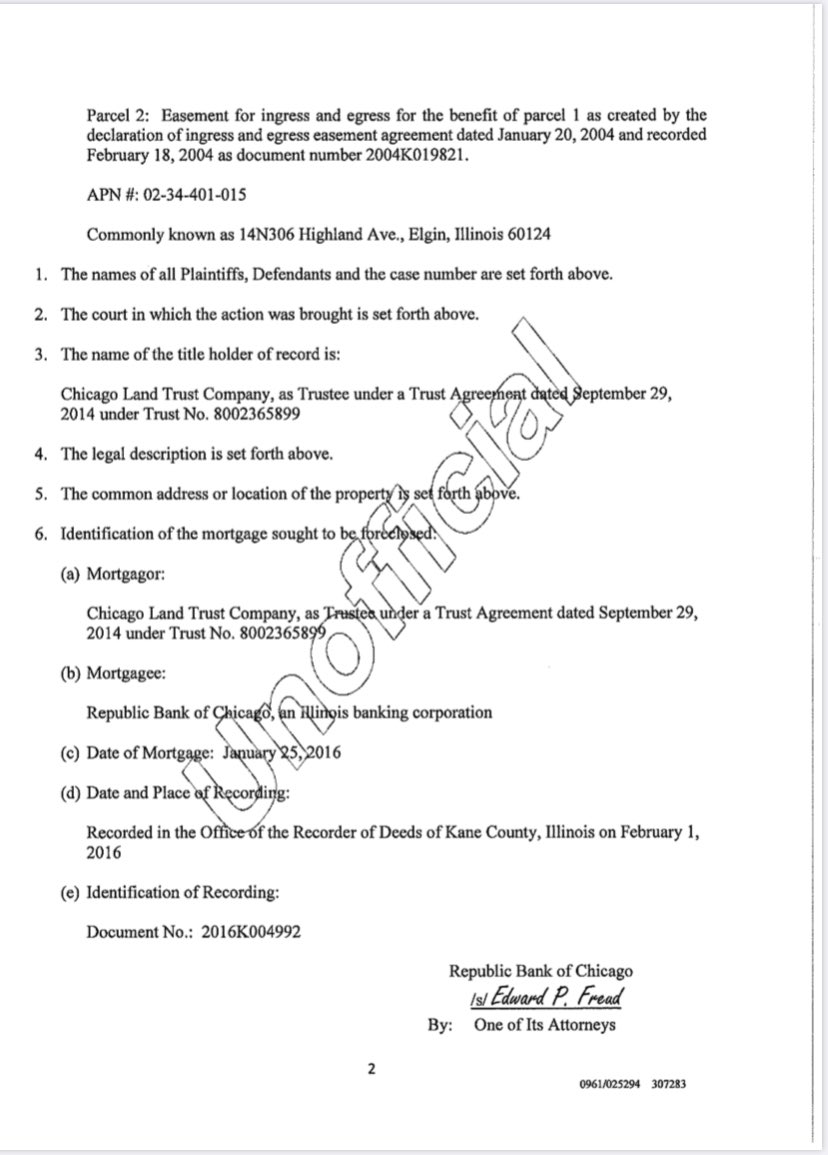
James MacDonald's role in the history of Mars Hill, in retrospect, seemed to involve being on the Mars Hill Board of Advisors and Accountability for just long enough to defend the use of Result Source to rig a No. 1 spot on the New York Times bestseller list for Mark and Grace Driscoll's Real Marriage and then depart because he was so confident that the BoAA would do its job he didn't need to be part of that process.
Rochberg, postmodernism, and Rebay: comparing Rochberg's Caprice Variations to Rebay's Historische Suite to make a point about Rochberg not being postmodern
Richard Taruskin (and some others) have pointed out that while George Rochberg has often been called a postmodernist he didn't use that term to describe himself. Whether it's Rochberg's writings themselves (A Dance of Polar Opposites or The Aesthetics of Survival) or in a book written about Rochberg, such as Amy Lynn Wlodarski's George Rochberg, American Composer: Personal Trauma and Artistic Creativity, you'll discover that however modernist he was for a while in formal terms he had, if you will, a Romantic heart. The Third String Quartet was the moment where he publicly repudiated serialism, or at least that is what has commonly been written.
Kim Hojin, however, has made a case that if we want to understand Rochberg's shift from serialism to his post-serialist musical language more attention should be paid to his Caprice Variations for Unaccompanied Violin, on a famous Paganini caprice. Hojin's treatise can be accessed here online. I plan to make an admittedly brief comparison of two works that play with epochs of music for musical effect, Rochberg's Caprice Variations and Ferdinand Rebay's Historisch Suite for flute and guitar.
Kim Hojin, however, has made a case that if we want to understand Rochberg's shift from serialism to his post-serialist musical language more attention should be paid to his Caprice Variations for Unaccompanied Violin, on a famous Paganini caprice. Hojin's treatise can be accessed here online. I plan to make an admittedly brief comparison of two works that play with epochs of music for musical effect, Rochberg's Caprice Variations and Ferdinand Rebay's Historisch Suite for flute and guitar.
Rae Linda Brown's book on Florence Price is published, and that deserves its own post
https://artsfuse.org/207001/book-review-the-heart-of-a-woman-the-life-and-music-of-florence-b-price-americas-first-important-black-woman-composer/
https://www.press.uillinois.edu/books/catalog/54mmh4mt9780252043239.html
The Heart of a Woman:The Life and Music of Florence B. Price by Rae Linda Brown
Kindle version is most affordable if you don't mind going Kindle
https://www.press.uillinois.edu/books/catalog/54mmh4mt9780252043239.html
The Heart of a Woman:The Life and Music of Florence B. Price by Rae Linda Brown
Kindle version is most affordable if you don't mind going Kindle
WaPo--classical music's overdue reckoning with racism; Joseph Horowitz--pandemic may be perfect storm that batters the arts
Washington Post has published a piece that says there's a reckoning in classical music regarding its long history of racism. Now I have read some fascinating pieces pointing out that there has been "selective memory" regarding the contributions of Afro-European musicians to European musical culture. With that in mind, and having read about how Joseph Bologne was part of getting Haydn's Paris symphonies premiered (handled negotiation of price with Haydn and conducted premieres), I can't help but suspect there's a uniquely Americanist subtext to a piece like the following:
https://www.washingtonpost.com/lifestyle/style/that-sound-youre-hearing-is-classical-musics-long-overdue-reckoning-with-racism/2020/07/15/1b883e76-c49c-11ea-b037-f9711f89ee46_story.html
https://www.washingtonpost.com/lifestyle/style/that-sound-youre-hearing-is-classical-musics-long-overdue-reckoning-with-racism/2020/07/15/1b883e76-c49c-11ea-b037-f9711f89ee46_story.html
Friday, July 17, 2020
J. I. Packer (1926-2020)
https://www.christianitytoday.com/news/2020/july/j-i-packer-died-evangelical-theologian-knowing-god.html
https://blog.ayjay.org/remembering-jim-packer/
https://www.thegospelcoalition.org/blogs/justin-taylor/j-i-packer-1926-2020/
Michael at Phoenix Preacher has written about Packer here.
https://phoenixpreacher.com/37931-2/
https://blog.ayjay.org/remembering-jim-packer/
https://www.thegospelcoalition.org/blogs/justin-taylor/j-i-packer-1926-2020/
Michael at Phoenix Preacher has written about Packer here.
https://phoenixpreacher.com/37931-2/
a "Case Against Open Letters" at The Atlantic could have been more succinct
If you have, by chance, read this ...
https://www.theatlantic.com/ideas/archive/2020/07/against-open-letters-all-open-letters/614143/
Graeme Wood's piece is succinct in its way but it would have been more succinct. Then again, readership for The Atlantic can't trade on presumed familiarity with the open letter precedents of the Christian blogosphere/dark web. I sent up the internet open letter genre with a pre-planned general purpose open letter suitable for probably any evangelical or progressive American Christian platform a few years ago.
http://wenatcheethehatchet.blogspot.com/2011/01/pre-written-all-purpose-open-letter-for.html
But there is a bit more that could be said ...
https://www.theatlantic.com/ideas/archive/2020/07/against-open-letters-all-open-letters/614143/
Graeme Wood's piece is succinct in its way but it would have been more succinct. Then again, readership for The Atlantic can't trade on presumed familiarity with the open letter precedents of the Christian blogosphere/dark web. I sent up the internet open letter genre with a pre-planned general purpose open letter suitable for probably any evangelical or progressive American Christian platform a few years ago.
http://wenatcheethehatchet.blogspot.com/2011/01/pre-written-all-purpose-open-letter-for.html
But there is a bit more that could be said ...
Wednesday, July 15, 2020
there need to be some more posts on music by Ferdinand Rebay ... in the future ...
Hope to fix that in the next month or so as there's a new release coming along of the violin and viola sonatas due out on Naxos. Plus ... noticed there's recordings of some of Rebay's solo guitar sonatas I hadn't spotted before by Kolk and Fernandez and I want to listen, at least, to their recordings of the first a minor sonata and the sonata in one movement in the next month or so. I, of course, have all seven of the solo guitar sonatas in score form and have been meaning to blog about/through these sonatas for years. Such is life ... but I hope to blog about a couple more Rebay sonatas at some point down the line.
Not that I want to forget about the Matiegka Op.31 cycle along the way, either ... or the magnificent Gilardino cycle or ... you might have the idea by now.
Tuesday, July 14, 2020
a brief observation about Ferdinand Rebay's handling of sonata form, ending on a dominant pedal point isn't your only option
At the risk of writing a merely axiomatic observation, going through sonata forms composed by Ferdinand Rebay (an Austrian composer whose music for guitar has been getting scholarly attention in the last decade), I am noticing that he ended his development sections in submediant keys.
The take-away from that is that while you might have been taught that the way to end a development section is to get to the dominant of your tonic key and set up a half-cadence effect that drives firmly to the arrival of the tonic chord in the tonic key, there have been other options. In a minor key sonata you could have a firm cadence in some key that isn't the tonic (like the mediant, for instance) that still lets you shift to the tonic key--ending a development on a gentle D major chord before switching to B minor for the start of the recapitulation is possible. To invoke Leonard Meyer on sonata forms there are syntactic as well as statistical ways of formulating a structural climax for a sonata form.
The "perfection" of how Mozart and Beethoven handled what scholars have called sonata forms can be over-rated (I've been on record as being far more a fan of Haydn than I am of Beethoven and I'm more a fan of Beethoven than Mozart, but find I enjoy music by Clementi and Hummel more than Mozart, which I find is a semi-heretical stance to take that Kyle Gann's already noted). But it's worth pointing out that there's nothing "wrong" with the textbook approach to sonata forms, the issue is that, particularly since Hepokoski and Darcy laid out the five types of sonata forms as flexible scripts, there are way more options for composing sonata forms than you might ever run into in an undergraduate music survey course.
The take-away from that is that while you might have been taught that the way to end a development section is to get to the dominant of your tonic key and set up a half-cadence effect that drives firmly to the arrival of the tonic chord in the tonic key, there have been other options. In a minor key sonata you could have a firm cadence in some key that isn't the tonic (like the mediant, for instance) that still lets you shift to the tonic key--ending a development on a gentle D major chord before switching to B minor for the start of the recapitulation is possible. To invoke Leonard Meyer on sonata forms there are syntactic as well as statistical ways of formulating a structural climax for a sonata form.
The "perfection" of how Mozart and Beethoven handled what scholars have called sonata forms can be over-rated (I've been on record as being far more a fan of Haydn than I am of Beethoven and I'm more a fan of Beethoven than Mozart, but find I enjoy music by Clementi and Hummel more than Mozart, which I find is a semi-heretical stance to take that Kyle Gann's already noted). But it's worth pointing out that there's nothing "wrong" with the textbook approach to sonata forms, the issue is that, particularly since Hepokoski and Darcy laid out the five types of sonata forms as flexible scripts, there are way more options for composing sonata forms than you might ever run into in an undergraduate music survey course.
Sunday, July 12, 2020
Saturday, July 11, 2020
Jeremy Bass recording of guitar sonatas by David del Puerto is out
I like to hunt around for cycles of solo guitar sonatas and the del Puerto cycle got on my radar a while back. I got Jeremy Bass' treatise on the first three David del Puerto sonatas and was wondering if we might get recordings of some of those and the answer to that implicit question is "yes".
https://www.newmusicusa.org/profile/jeremyandrewbass/
More later as time permits, plus I've got to give the sonatas a listen. I tend to put too much on my plate for music/listening/blogging projects. It will take a while before I can get to these. But that hardly means I can't tell you about the music being available in recorded form now.
https://www.newmusicusa.org/profile/jeremyandrewbass/
More later as time permits, plus I've got to give the sonatas a listen. I tend to put too much on my plate for music/listening/blogging projects. It will take a while before I can get to these. But that hardly means I can't tell you about the music being available in recorded form now.
another deBoer--"the irresistable force vs the ironized object"
If you're not familiar with what some academics have called the California ideology then you probably don't want to read David Roberts and Peter Murphy where they defined it in Dialectic of Romanticism (which I admit I did); in that book Roberts and Murphy proposed way, way back in, ahem, 2005 that there has been a conflict within the U.S. between what they called the Chicago school and the California school. You don't have to read that book, though, because other people have been defining the California ideology in more recent terms, which is very roundaboutly how I get to a new and probably self-destructing post by Fredrik deBoer.
"Old Time Rock and Roll", on the self-congratulatory failure so often at the core of music about music
Although people who lived through the 1960s could have many reasons to claim rock and roll died in the 1970s because of progressive rock or because of disco or because of whatever, for this Generation X'er the most obvious reason we could consider the possibility that rock and roll "died" in the 1970s is explicable in terms of Bob Seger and the Silver Bullet Band.
You may know the songs before I name them but let's dispense with suspense (if there was any):
That seems pretty harsh to single out one musician, as any piece of music criticism can potentially be. Why Bob Seger?
You may know the songs before I name them but let's dispense with suspense (if there was any):
Friday, July 10, 2020
some more thoughts on the death of Nikolai Kapustin--how the formerly Soviet composer's work can reveal that metahistorical/political narratives in the West didn't really promote successful 3rd stream anymore than residual Socialist Realism might have
The more time passes since the end of the Cold War the more we in the West get to learn about what the arts were like in the Soviet bloc. The more we learn about how diverse and varied music in central and eastern Europe and Soviet Asia was the more ludicrous the claim that Western arts are more diverse and liberal due to claims of "freedom". Not that I wish to have born anywhere else but the United States of America, for a variety of reasons I've no obligation to share at even my own blog, but my larger point is that now that the Cold War has been over for a generation or two certain mythologies that were applied to, say, jazz, by Cold War era intellectuals no longer have to be taken as "the" narrative for an urban style of popular music that has been truly global since a century ago.
MASS - Steve Dobrogosz
Years ago ... someone asked if I'd heard Steve Dobrogosz' Mass
https://oldlife.org/2016/08/23/was-francis-schaeffer-an-intellectual/#comment-146073
https://www.youtube.com/watch?v=Xw__h35uBtw
https://oldlife.org/2016/08/23/was-francis-schaeffer-an-intellectual/#comment-146073
...Ever checked out what Steve Dobrogosz does with The Mass. Not saying it’s a perfect correlation to what you’re interested in, but it’s certainly worth considering.Well, took a while to get around to it. But ...
https://www.youtube.com/watch?v=Xw__h35uBtw
Bryan Townsend asking when Mozart will get cancelled, the bad faith of cancel culture isn't the "cancel" it's that they don't first sell what they want us to hear instead
I've started reading The Music Salon blog in the last year or so and a recent post got me thinking.
http://themusicsalon.blogspot.com/2020/07/when-will-mozart-get-cancelled.html
http://themusicsalon.blogspot.com/2020/07/when-will-mozart-get-cancelled.html
Thursday, July 09, 2020
Wednesday, July 08, 2020
Fifteen years on The New Yorker finally gets around to writing about The Last Airbender series?
In terms of animated adventure shows for children over the last thirty years in the United States it's not really a contest for me which shows have turned out to be the most significant. In chronological order I'd say the significant touchstones of the genre have been Batman: the animated series (including the sequel series for Superman and Justice League, particularly); Samurai Jack; and then Avatar: The Last Airbender. You could in many respects skip the entirety of animated adventure shows for American kids in the last thirty years if you stuck to just BTAS, Samurai Jack, and The Last Airbender.
Tuesday, July 07, 2020
Monday, July 06, 2020
Nikolai Kapustin November 22, 1937 - July 2, 2020
Perhaps the most important thing that didn't happen to the Ukrainian pianist and composer Nikolai Kapustin is that, beyond a somewhat expected and inevitable set of constraints from Soviet era bureaus, no one involved in his musical education went so far as to explicitly tell Kapustin he could not possibly develop a synthesis of the musical vocabulary of jazz with the forms of late Romantic and post-Romantic large-scale forms.
sometimes it's fun to read reviews of books I probably won't read ... The Enchantments of Mammon
There is much to be said in favor of criticism and reviews, and one of the chief benefits of reading criticisms can, sometimes, be discovering why a book you thought about maybe reading can be relegated to "don't bother" based on reviews from people whose views you take seriously.
Take The Enchantments of Mammon, a book I was vaguely considering reading at one point but then ... I saw this ...
Take The Enchantments of Mammon, a book I was vaguely considering reading at one point but then ... I saw this ...
Sunday, July 05, 2020
Friday, July 03, 2020
Matiegka: Six Sonates Progressives Op. 31 Sonata No. 1 in C major, a gently jokey sonata form that recapitulates Theme 1 in the wrong key and course-corrects halfway through, some thoughts on composers who couldn't break rules that weren't codified yet
Finally, I'm getting around to writing about Matiegka's Op. 31, No. 1 solo guitar sonata
Robert Gjerdingen's galant schemas as an entry point for pop/classical fusions--tonal and modal variants on the Romanesca by way of the Beatles, the Eagles and TLC
In the era of covid-19 there are concerns, pretty serious concerns, that classical music in the orchestral idiom may not survive the policies that have been considered necessary for dealing with the pandemic. The Music Salon blog features a few recent pieces that I'll be referencing as a kind of news cycle baseline for what I'm about to discuss:
Thursday, July 02, 2020
another Matiegka sonata analysis incubating
The sonata I plan to discuss will be Op. 31, No. 1 in C major, which is a charming little sonata. I've been meaning to discuss the Op. 31 progressive sonatas for a while and am finally getting to a point where I can blog about one of them. I know Matiegka's not everyone's favorite (most people will never have heard of him, but especially as I've been digging into Gjerdingen's work on the galant style I think a case can be made that we can study Matiegka's work not so much as "lightweight" early Romantic guitar music but more as an example of a more galant style approach, particularly with his deliberately "wrong" key recapitulation in the opening sonata form for theme 1. So if anyone has been reading the blog for years wondering when I'd get back to Matiegka, that's going to happen soon, I hope after or during the 4th of July weekend depending on how things play out.
Wednesday, July 01, 2020
Fredrik deBoer on "The Chinese Finger Trap" of an American contemporary left that has no meaningful power and zealous wields its symbolic/rhetorical power
https://fredrikdeboer.com/2020/06/27/the-chinese-finger-trap/
June 27, 2020Politics
I would say at a glance that the contemporary left is defined fundamentally by both a lack of meaningful power and a corresponding tightening of the grip on the meaningless power it does have. The more we cannot get reparations, the more we rename buildings; no end to mass incarceration, but recasting of cartoons; no seats in the Senate, but oh, how we make the Poetry Foundation shake…. And the question that we’re left with is, if we never stop tightening our shaking grip, will our reach ever exceed our grasp? Do we have short arms, or are they only bent from the strain of grasping in such impotent rag
June 27, 2020Politics
I would say at a glance that the contemporary left is defined fundamentally by both a lack of meaningful power and a corresponding tightening of the grip on the meaningless power it does have. The more we cannot get reparations, the more we rename buildings; no end to mass incarceration, but recasting of cartoons; no seats in the Senate, but oh, how we make the Poetry Foundation shake…. And the question that we’re left with is, if we never stop tightening our shaking grip, will our reach ever exceed our grasp? Do we have short arms, or are they only bent from the strain of grasping in such impotent rag
some headlines from Seattle since the start of the CHOP/CHAZ
https://www.kiro7.com/news/local/seattle-fire-department-criticized-fatal-chop-shootings/UHJ2PD6ZANCJ5N2Z3TLVUJAVMA/
https://kuow.org/stories/why-defund-the-police-has-become-the-rallying-cry-at-seattle-protests
https://www.kuow.org/stories/updates-protests-for-racial-injustice-in-the-seattle-area
https://www.seattletimes.com/seattle-news/politics/durkan-asks-seattle-city-council-to-investigate-sawant-for-contemptuous-behavior/
https://www.thestranger.com/slog/2020/06/30/44005217/mayor-durkan-calls-for-investigation-of-kshama-sawant
https://www.thestranger.com/slog/2020/06/30/44007426/sawant-responds-to-jenny-durkan-cites-citizens-call-for-durkan-to-resign?cb=f2761a5a5be4cfe3e646fbceb422d732
https://kuow.org/stories/why-defund-the-police-has-become-the-rallying-cry-at-seattle-protests
https://www.kuow.org/stories/updates-protests-for-racial-injustice-in-the-seattle-area
https://www.seattletimes.com/seattle-news/politics/durkan-asks-seattle-city-council-to-investigate-sawant-for-contemptuous-behavior/
https://www.thestranger.com/slog/2020/06/30/44005217/mayor-durkan-calls-for-investigation-of-kshama-sawant
https://www.thestranger.com/slog/2020/06/30/44007426/sawant-responds-to-jenny-durkan-cites-citizens-call-for-durkan-to-resign?cb=f2761a5a5be4cfe3e646fbceb422d732
Sunday, June 28, 2020
George N Gianopoulous-City Vignettes for Alto Saxophone and Guitar
Performed impeccably by Duo Montagnard. If you have never bought albums of chamber music for alto saxophone and guitar and want to Duo Montagnard is one of the ensembles you should check out.
https://www.youtube.com/watch?v=8e3CGJSAphU
One of these days I might have to do a more general post on chamber music for alto saxophone and guitar ...
https://www.youtube.com/watch?v=8e3CGJSAphU
One of these days I might have to do a more general post on chamber music for alto saxophone and guitar ...
Saturday, June 27, 2020
Michael W Harris' The Rise of Gospel Blues: The Music of Thomas Andrew Dorsey in the Urban Church
The Rise of Gospel Blues: The Music of Thomas Andrew Dorsey in the Urban Church
Michael W. Harris
Copyright (c) 1992 by Michael W. Harris
Oxford University Press
ISBN 0-19-506376-7
Michael W. Harris
Copyright (c) 1992 by Michael W. Harris
Oxford University Press
ISBN 0-19-506376-7
Thursday, June 25, 2020
Toby Twining: Chrysalid Requiem--Sanctus
https://www.youtube.com/watch?v=HgGqm_jnL_0
I, of course, learned about this reading Kyle Gann's The Arithmetic of Listening, which is a great book on the history of tuning systems I'm going to have to blog about at some point this year. I'm still committed to composing using the equal-tempered set-up we guitarists are given who don't have access to fretboards that have alternate tunings, but I've been intrigued by a lot of work done in what's maybe too colloquially known as microtonal music.
I, of course, learned about this reading Kyle Gann's The Arithmetic of Listening, which is a great book on the history of tuning systems I'm going to have to blog about at some point this year. I'm still committed to composing using the equal-tempered set-up we guitarists are given who don't have access to fretboards that have alternate tunings, but I've been intrigued by a lot of work done in what's maybe too colloquially known as microtonal music.
some pieces at GetReligion on electoral subsets--evangelicals as distinct from charismatics/pentecostals, and who's considered what kind of anointed
https://www.getreligion.org/getreligion/2020/6/8/trump-support-weakens-among-white-evangelicals-so-nytimes-tunes-in-lots-of-old-folks
...
...
I was reading a New York Times piece the other day — “Trump’s Approval Slips Where He Can’t Afford to Lose It: Among Evangelicals” — when I found myself thinking about the Rev. Pat Robertson and quarterback Tom Brady.
This may take some explaining.
For starters, if you know anything about the 2016 election, you know that white evangelicals helped fuel Trump’s success in the GOP primaries. Then, in the general election, white and Latino evangelicals were crucial to his pivotal win in Florida. But the key to his election was winning the votes of Rust Belt (a) Democrats who previously voted for Barack Obama, (b) conservative and older Catholics, (c) angry labor union members/retirees or (d) citizens who were “all of the above.”
Catholic swing voters were much more important to Trump than white evangelicals — in the 2020 general election (as opposed to primaries).
...Sunday, June 21, 2020
Alan Jacobs ended up writing a few more things about critical theory and critical theories
Alan Jacobs, who I note has an endorsement blurb on the back of Fredrik Deboer's forthcoming book The Cult of Smart, which I, of course, fully intend to read when it comes out, has been essaying into critical theory a bit more and interacting with some, though not necessarily a lot, of writing from James Lindsay over at New Discourses.
Saturday, June 20, 2020
some links for the weekend with a bit of a PCA/OPC and/or Reformed theme
It would seem that some folks of the OPC and PCA wanted to give three magazines worth of ammunition to The Wartburg Watch readership by way of comments online ... Ed Stetzer has caught wind of it--Aimee Byrd and Beth Moore have shared how complementarians have talked about them behind closed doors (even if the closed doors in question turn out to be cyberspace ones).
https://www.christianitytoday.com/edstetzer/2020/june/complementarians-closed-rooms-aimee-byrd-beth-moore.html
https://www.christianitytoday.com/edstetzer/2020/june/complementarians-closed-rooms-aimee-byrd-beth-moore.html
The Romantic era seeds from which Crescendo Rock grew--Leonard B. Meyer's observations on statistical accumulation and rejection of tonal syntactics in Romanticism and how we can hear that end point in, say, U2 songs
or "Leonard B. Meyer on the Romantic era shift from syntactic to statistical climax in music, in other words, crescendo rock is late, late Romanticism in pop"
Years ago I wrote about a piece at Slate in which an author inveighed against "crescendo rock". Carl Wilson vented some spleen about The National in particular and "crescendo rock" in general. What I wrote was over here but I'll quote a brief passage from the Slate piece to give an example of Wilson's invective against crescendo rock.
Years ago I wrote about a piece at Slate in which an author inveighed against "crescendo rock". Carl Wilson vented some spleen about The National in particular and "crescendo rock" in general. What I wrote was over here but I'll quote a brief passage from the Slate piece to give an example of Wilson's invective against crescendo rock.
local news links: King County labor expels Seattle Police Union, details lacking in SPD evacuation of East Precinct (i.e. who, if anyone, ordered it?), one dead and one wounded in CHOP/CHAZ
https://crosscut.com/2020/06/city-council-will-consider-defunding-seattle-police
https://mynorthwest.com/1966469/seattle-police-union-king-county/
https://crosscut.com/2020/06/king-county-labor-council-expels-seattle-police-union
https://crosscut.com/2020/06/confusion-anger-seattle-police-dept-after-east-precinct-exit
https://www.capitolhillseattle.com/2020/06/one-reported-dead-one-wounded-in-overnight-capitol-hill-protest-zone-shooting/
https://www.thestranger.com/slog/2020/06/19/43938596/chop-medic-intervened-in-a-sexual-assault-in-cal-anderson
https://mynorthwest.com/1966469/seattle-police-union-king-county/
https://crosscut.com/2020/06/king-county-labor-council-expels-seattle-police-union
https://crosscut.com/2020/06/confusion-anger-seattle-police-dept-after-east-precinct-exit
https://www.capitolhillseattle.com/2020/06/one-reported-dead-one-wounded-in-overnight-capitol-hill-protest-zone-shooting/
https://www.thestranger.com/slog/2020/06/19/43938596/chop-medic-intervened-in-a-sexual-assault-in-cal-anderson
Thursday, June 18, 2020
Ethan Hein has a post on learning to improvise in different modes using only the white keys, which got me thinking about the "white key" fugal tradition in Russian music
Ethan Hein's got a new post about learning how to improvise to music that's written only using the white piano keys. The list is broad-ranging in terms of style and fun for highlighting which white keys only modes are involved in which songs over which to jam.
"Army of Me" would have been great for locrian but, ahem, obviously not in white keys only. Yes, I just tipped off readers that I'm a fan of Bjork, at least her work up through Vespertine anyway.
http://www.ethanhein.com/wp/2020/learn-to-improvise-on-the-white-piano-keys/
"Army of Me" would have been great for locrian but, ahem, obviously not in white keys only. Yes, I just tipped off readers that I'm a fan of Bjork, at least her work up through Vespertine anyway.
http://www.ethanhein.com/wp/2020/learn-to-improvise-on-the-white-piano-keys/
Monday, June 15, 2020
Ethan Hein discusses "Fugue as sample flip"--explanations of sampling techniques remind me that "looping" might fit Schenkerian "knupftechnik", and other ways in which the compositional techniques across hip hop and fugal writing may potentially overlap, with a pitch for the idea that a fugal language can be built from Stevie Wonder songs
http://www.ethanhein.com/wp/2020/fugue-as-sample-flip/
...
In the video that Deb links to, DJ Dahi says that three are three main techniques you can use to flip a sample: looping it, chopping it, and reversing it.
- Looping is the simplest of the three techniques, but its musical significance is deeper than you might think. In his must-read book Making Beats, Joe Schloss points out that looping a sample juxtaposes the sampled material with itself by connecting the end of a phrase with its beginning. In so doing, “looping automatically recasts any musical material it touches, insofar as the end of a phrase is repeatedly juxtaposed with its beginning in a way that was not intended by the original musician. After only a few repetitions, this juxtaposition… begins to take on an air of inevitability. It begins to gather a compositional weight that far exceeds its original significance” (p. 137). Looping can take an idea that was meant to be linear and turn it into something circular, and that act can have political valence.
- Chopping means splitting a sample into segments (e.g. individual drum hits or notes) and then recombining the segments out of order, and/or removing some of them. Audio Two’s “Top Billin'” beat is a chop of the “Impeach the President” drums. Pete Rock created the beat in “They Reminisce Over You (T.R.O.Y.)” by chopping the drum intro to James Brown’s “Say It Loud (I’m Black and I’m Proud).”
- Reversing is the least common technique of the three, but when it appears, it’s conspicuous. The best example I can think of is the chorus to “Work It” by Missy Elliott. She follows the line “Put my thang down, flip it and reverse it” with that same line backwards, repeated twice.
...
Now what's intriguing about this is that coming at things from the perspective of being a classical guitarist who studied what could be called Eurological compositional techniques each of these techniques arguably has correspondences with gestural transformation in what's colloquially known as classical music.
Sunday, June 14, 2020
Somebody at The Future Symphony Institute got Taruskin's latest, which is totally worth reading
https://twitter.com/FutureSymphony/status/1268149771912589313
I finished it within weeks of getting it back in April. Taruskin's always worth reading.I hope whoever at FSI that's about to read the book enjoys it as much as I did. Be ready for Taruskin to heap lavish but deserved praise on Leonard B. Meyer. :) Also, it's got one of the most passionate recent defenses of Haydn I've read in a while and since I adore the music of Haydn I'll never complain about that.
I finished it within weeks of getting it back in April. Taruskin's always worth reading.I hope whoever at FSI that's about to read the book enjoys it as much as I did. Be ready for Taruskin to heap lavish but deserved praise on Leonard B. Meyer. :) Also, it's got one of the most passionate recent defenses of Haydn I've read in a while and since I adore the music of Haydn I'll never complain about that.
Saturday, June 13, 2020
later writings from Leonard B. Meyer on the ideological double binds of late, late Romanticism --notes toward a neo-galant pop/classical fusion
One of the things I thought about after reading and rereading John Borstlap's The Classical Revolution was how much of his ideas were articulated decades earlier by Leonard B. Meyer, not just in Music, the Arts, and Ideas (which is a magnificent book I learned about through Kyle Gann's blog) but in other writings. A point that is paradoxically latent in Borstlap's book is that while the music of the Romantic era itself has much to commend the ideologies of the Romantic era are the source of many musical problems, specifically as they were taken up as battle cries for high modernism or what Meyer once called "late, late Romanticism".
follow up coverage of WA state ESD UI fraud situation, claims and counter-claims about who was noticing what when
For those who have kept some tabs on the unemployment insurance fraud situation that happened with the Washington State Employment Security Division ...
Thursday, June 11, 2020
#defund the police? Some thinking about possible ideas I hear from some conservative friends that may (or may not?) be common cause with progressives on police reform
I'm indisposed to hashtag approaches to issues by temperament but even I occasionally catch wind of hashtags that can show up on Twitter. #defundthepolice is one of those. Living in the age of CHAZ and hearing Sawant has gotten behind a specific hashtag ... I've been seeing some talk about what this hashtag may entail. Thus ...
Wednesday, June 10, 2020
a few links for mid-week--executive order stuff, UI fraud in WA state, Adolph Reed Jr on the problem of uplift, a theory about intra-elite conflict in the US, UK classical music in peril, and Doug Shadle on a Santa symphony
Since a certain executive order has been in the news ... we'll start with that after the break.
Tuesday, June 09, 2020
a reading list, for the moment presented without much explanation (11-14-2020, but it's a list of books on exorcism, diabology, The Watchers tradition, and spiritual warfare manuals in Christian writings and academic commentary thereon spanning 1895 to 2020)
But you'll see there's, ahem, a very persistent theme after the break. (updated as of 11-15-2020)
Saturday, June 06, 2020
Triablogue posts on the passing of Steve Hays 1959-2020, brief thoughts about a friend
http://triablogue.blogspot.com/2020/06/steve-hays-1959-2020.html
During the years that Michael Spenser was alive he found Steve Hays at Triablogue an occasional thorn in his side. In the Boar's Head Tavern orbit Steve Hays was viewed as a trouble-maker.
I got to know Steve roughly twenty-seven years ago in college at a cadre at a little school by a canal. I met him around the same time I met one of his debating partners, Jeff Lowder. I would not have guessed back in the 1990s that I had ended up meeting members of the ... should I call it the dark web debates on Reformed Christianity and atheism? Jeff was agnostic at the time but his shift to atheism seemed fairly certain to me but that's a whole other topic. Steve Hays has died.
During the years that Michael Spenser was alive he found Steve Hays at Triablogue an occasional thorn in his side. In the Boar's Head Tavern orbit Steve Hays was viewed as a trouble-maker.
I got to know Steve roughly twenty-seven years ago in college at a cadre at a little school by a canal. I met him around the same time I met one of his debating partners, Jeff Lowder. I would not have guessed back in the 1990s that I had ended up meeting members of the ... should I call it the dark web debates on Reformed Christianity and atheism? Jeff was agnostic at the time but his shift to atheism seemed fairly certain to me but that's a whole other topic. Steve Hays has died.
haiku about this year
2020:
film by Takashi Miike
script by Argento
The soundtrack could be by Penderecki perhaps
film by Takashi Miike
script by Argento
The soundtrack could be by Penderecki perhaps
Wednesday, June 03, 2020
possible durational correspondence between the syntactics of a standard verse-chorus, verse-chorus, bridge, verse-chorus pop song and a sonata form (a Ragtime and Sonata Forms postscript)
Back in April I wrote my roughly 131-page Ragtime and Sonata Forms project and for all of the readers who stopped well before part 18 it was in part 18 I provided a possible road-map for ragtime sonata forms. Well, since that got published I've been thinking more about how similar durational correspondences or proportional correspondences are possible in pop songs.
Freddie Deboer on Jonathan Haidt's Belief in Belief and why he can't buy it
As with so many of his posts it may be up for only a few days but, well, I managed to read it, and so here's a lengthy passage that stood out.
Tuesday, June 02, 2020
Michael Partington plays Bryan Johanson Guitar Sonata No. 4
With the lockdown conditions as they have been I didn't get a chance to hear his recital but I can share some of the music he's been playing.
https://www.youtube.com/watch?v=mgjqSH7bIMw&t=55s
https://www.youtube.com/watch?v=mgjqSH7bIMw&t=55s
Monday, June 01, 2020
it's not so good here in the Emerald City, stuff that i thought of writing about but may not for a while (but ironically just wrote about)
I'm okay but even I don't feel like blogging under the current circumstances and I had meant to blog some stuff that's really cool from a Leonard B. Meyer book I've been reading, one I referenced in Ragtime and Sonata Forms about proposed musical "universals". There are books I've been wanting to write about for months and I haven't gotten around to it because life is life and life is stressful. Last month's thesis pretty much was a thesis and there's other stuff in off-line life I've been working on.
Mahalia Jackson: "Keep Your Hand on the Plow"
Because she's been one of my musical heroes for a very long time ... and because after what's happened in Seattle over the weekend the message seems no less timely now than when Mahalia Jackson sang the song.
https://www.youtube.com/watch?v=vW5ypOrbZcg
https://www.youtube.com/watch?v=vW5ypOrbZcg
Saturday, May 30, 2020
notes on Ep 8 of Older Pastor/Younger Pastor--Sutton Turner confirms that Mark Driscoll has blocked him across social media and won't talk to him in any capacity, and some other things
I thought it was going to be a seven episode run but there are eight episodes.
https://amicalled.com/pastoral-lessons-from-mars-hill-church-e8-lessons-on-recovering-after-crisis/
What is more, Sutton Turner has published the transcript of episode 8
https://investyourgifts.com/recovering-after-crisis/
Ah, thanks! That sure beats Wenatchee The Hatchet having to spend a uncounted hours transcribing things like Mark Driscoll's 2008 spiritual warfare series before being able to do any analysis of it!
Excerpts from and thoughts/notes on Episode 8 are below:
https://amicalled.com/pastoral-lessons-from-mars-hill-church-e8-lessons-on-recovering-after-crisis/
What is more, Sutton Turner has published the transcript of episode 8
https://investyourgifts.com/recovering-after-crisis/
Ah, thanks! That sure beats Wenatchee The Hatchet having to spend a uncounted hours transcribing things like Mark Driscoll's 2008 spiritual warfare series before being able to do any analysis of it!
Excerpts from and thoughts/notes on Episode 8 are below:
Thursday, May 28, 2020
notes on the Older Pastor/Younger Pastor series with Ryan Williams, Dave Bruskas and Sutton Turner on lessons from Mars Hill--UPDATE: quotes from transcripts
So the seven-part series has recently, if it goes to seven parts, wrapped up. As Sutton Turner has commented and fielded questions here at Wenatchee The Hatchet he would probably not be too surprised that Wenatchee The Hatchet has taken the five hours needed to listen to all seven episodes, and likely Bruskas and Ryan Williams would not be surprised at this post either. Nobody who knows the history of this blog as a chronicle of the life and death of Mars Hill would be. So ... some notes ...
Monday, May 25, 2020
the diatonic modes as inversions of each other, a little riff on George Rochberg's proposal that Western music has had cycles of favoring symmetrical and assymetrical paradigms for pitch organization in the last thousand years
It might be because I've been reading George Rochberg's A Dance of Polar Opposites this year, but I've been struck by a passage near the end where he wrote:
Alan Jacobs on Misunderstanding Critical Theory
Having spent half a decade swimming in Adorno's work to come to a sense of his approach to music, the sociology of music and how that has been relevant to Anglo-American musicology and music history; and having seen how conservatives by and large seem to make a complete and utter hash of defining or discussing critical theory (more or less it starts and stops at "so it's communism"), I'm not surprised Alan Jacobs recently felt obliged to explain that a lot of what conservatives define as "critical theory" has nearly nothing directly (if at all) with the Frankfurt school
https://blog.ayjay.org/on-misunderstanding-critical-theory/
https://blog.ayjay.org/on-misunderstanding-critical-theory/
Sunday, May 24, 2020
remembering an old poem I wrote, riffing on a specific American "rebel" mentality, during a time of lockdown
Ecclesiastes 9:4-5 Common English Bible (CEB)
4 Whoever is among the living can be certain about this. A living dog is definitely better off than a dead lion, 5 because the living know that they will die. But the dead know nothing at all. There is no more reward for them; even the memory of them is lost.
https://wenatcheethehatchet.blogspot.com/2018/08/the-action-hero-breaks-fourth-wall.html
4 Whoever is among the living can be certain about this. A living dog is definitely better off than a dead lion, 5 because the living know that they will die. But the dead know nothing at all. There is no more reward for them; even the memory of them is lost.
https://wenatcheethehatchet.blogspot.com/2018/08/the-action-hero-breaks-fourth-wall.html
the action hero breaks the fourth wall
it is far better
to be a dying lion
than a living dog
to be a dying lion
than a living dog
Saturday, May 23, 2020
discussion series: Pastoral Lessons from Mars Hill Church with Ryan Williams, Dave Bruskas & Sutton Turner
The seventh episode of an apparently seven (?) part series has gone up in which Ryan Williams talks with Dave Bruskas and Sutton Turner. Owing to offline life events I have had other projects going and haven't tackled MHC related stuff in a while. Now that Ragtime and Sonata Forms is up, though, I'll have time to get to the series, eventually. For those who haven't heard of the series the links to the episodes are available after the break.
Get Religion's Terry Mattingly on an Atlantic piece on QAnon and evangelicalism, proposes there's a conspiracy about conspiracies believed by evangelicals that may be a conspiracy theory on the part of journalists
https://www.getreligion.org/getreligion/2020/5/18/atlantic-probes-qanon-sect-and-finds-shocking-another-evangelical-ish-conspiracy
There are times, when reading the sprawling “Shadowland” package at The Atlantic, when one is tempted to think that the goal was to weave a massive liberal conspiracy theory about the role that conservative conspiracy theories play in Donald Trump’s America.
At the center of this drama — of course — is evangelical Christianity. After all, evangelical Christians are to blame for Trump’s victory, even if they didn’t swing all those crucial states in the Catholic-labor Rust Belt.
It’s almost as if evangelicals are playing, for some strategic minds on the left, the same sick, oversized role in American life that some evangelicals assign to Hillary Clinton, George Soros, Bill Gates and all those liberal Southern Baptist intellectuals who love Johnny Cash and Jane Austen
Let’s focus on this piece: “The Prophecies of Q.” Toward the end, a fervent supporter of Trump and the mysterious QAnon offers her credo. It’s clear that she speaks for, you know, millions of people hiding like terrorist sleeper cells in ordinary pews from coast to coast.
...
https://www.theatlantic.com/magazine/archive/2020/06/qanon-nothing-can-stop-what-is-coming/610567/Friday, May 22, 2020
as reactionary/right American paranoia goes ...
5-22-2020
the "plandemic" rants
would be crazier if she
were now president
...
the "plandemic" rants
would be crazier if she
were now president
...
sundry links--The Atlantic laid off 68 staffers post covid 19, and Washington state temporarily halted UI payments in wake of fraud activity
https://www.axios.com/media-journalism-layoffs-coronavirus-cebc2349-bbc9-48db-9665-4bac8180b800.html
The traditional journalistic job market has been on a downward shift for a generation. The age of the internet meant that a lot of the jobs that used to be out there just stopped existing or were phased out, a point that Scott Timberg used to write about when he was alive.
The traditional journalistic job market has been on a downward shift for a generation. The age of the internet meant that a lot of the jobs that used to be out there just stopped existing or were phased out, a point that Scott Timberg used to write about when he was alive.
Thursday, May 21, 2020
Mr. T's birthday, for those who didn't know (but especially for those who do)
hope he had a great one. Just throwing that out there. He had a cartoon series on Saturday mornings I used to watch back in the 1980s. No, I am not making that up. I always liked the theme song for the show. I mean, who wouldn't? :) So here's to Mr. T, seeing as it's his birthday.
heard "Shallow" from the new A Star is Born again ...
and it still sounds like what would happen if Don Henley and Patti Smith got drunk at some party and decided to cover a Dan Folgelberg song.
Alan Jacobs is skeptical about a "deep literacy" longform lament at National Affairs and I can't blame him
While there was an article I thought was a great read at National Affairs on the Cold War and its legacy with respect to United States arts policy and the post Cold War crisis of purpose in US arts policy NEA and otherwise (https://nationalaffairs.com/publications/detail/a-cultural-agenda-for-our-time) which I wrote about over here ...
https://wenatcheethehatchet.blogspot.com/2019/06/philip-jeffery-in-national-affairs.html
...
There are other articles at National Affairs that are more in the "why oh why" category and Alan Jacobs has singled out one about "deep literacy". My own response is that the article in question is a downbeat variation on George Steiner's In Bluebird's Castle.
https://wenatcheethehatchet.blogspot.com/2019/06/philip-jeffery-in-national-affairs.html
...
There are other articles at National Affairs that are more in the "why oh why" category and Alan Jacobs has singled out one about "deep literacy". My own response is that the article in question is a downbeat variation on George Steiner's In Bluebird's Castle.
Saturday, May 16, 2020
catching up with Doug Shadle's blogging--arguing against essentialism is great but also can problematize cultural appropriation
Catching up to Shadle's blogging in the last month. A few rambling thoughts ... (aka about 3,000 words)
Van has an article on VIcente Lusitano, a Portugese composer of African lineage circa 1520-1561
I have long been skeptical of sweeping claims that what's conventionally known as classical music is music by "white" people. Europeans? Sure, okay, but definitions of "white" have varied over time. Anglo-Saxons wouldn't consider Spaniards or Portugese to necessarily be white, let alone a Portugese man of African lineage such as Vicente Lusitano, whose life and work is featured in a recent article at VAN.
https://van-us.atavist.com/vicente-lusitano
and for good measure
https://blackcentraleurope.com/sources/1500-1750/the-musical-theorist-vicente-lusitano-1561/
Never heard of Vicente Lusitano? I hadn't either, and if you want to hear one of his works go over here.
https://www.youtube.com/watch?v=Na87u0A9qT4
and if you can read music and want to see his surrealistic chromatic polyphony for yourself go over here.
https://imslp.org/wiki/Heu_me_Domine_(Lusitano%2C_Vicente)
https://van-us.atavist.com/vicente-lusitano
and for good measure
https://blackcentraleurope.com/sources/1500-1750/the-musical-theorist-vicente-lusitano-1561/
Never heard of Vicente Lusitano? I hadn't either, and if you want to hear one of his works go over here.
https://www.youtube.com/watch?v=Na87u0A9qT4
and if you can read music and want to see his surrealistic chromatic polyphony for yourself go over here.
https://imslp.org/wiki/Heu_me_Domine_(Lusitano%2C_Vicente)
former Acts 29 pastor Darrin Patrick has died, investigation pending, as yet no comments from Mark Driscoll on the passing of his one time pastor and friend (unless someone's spotted them in the last 8 days)
http://www.bpnews.net/54776/former-southern-baptist-pastor-darrin-patrick-49-dies-unexpectedly
https://www.christianitytoday.com/news/2020/may/darrin-patrick-died-seacoast-journey-st-louis-acts-29.html
https://religionnews.com/2020/05/08/friends-mourn-darrin-patrick-megachurch-pastor-and-author-who-died-unexpectedly/
https://www.postandcourier.com/news/sc-megachurch-pastor-dies-of-apparent-self-inflicted-gunshot-while-target-shooting/article_3cc3e2e2-9220-11ea-867b-0bd1bda308b8.html
https://julieroys.com/restored-pastor-former-acts-29-vp-darrin-patrick-dies-unexpectedly/
http://www.bpnews.net/54776/former-southern-baptist-pastor-darrin-patrick-49-dies-unexpectedly
https://www.stltoday.com/news/local/obituaries/darrin-patrick-who-founded-the-journey-megachurch-dies-at-49/article_14df0e37-dda0-5c91-8272-62f7a36028e1.html
The Mighty's Juliette Virzi 's piece doesn't mention the part about the cause of death as a suicide investigation is under way. However, the piece samples Twitter condolences in the wake of the death.
https://www.christianitytoday.com/news/2020/may/darrin-patrick-died-seacoast-journey-st-louis-acts-29.html
https://religionnews.com/2020/05/08/friends-mourn-darrin-patrick-megachurch-pastor-and-author-who-died-unexpectedly/
https://www.postandcourier.com/news/sc-megachurch-pastor-dies-of-apparent-self-inflicted-gunshot-while-target-shooting/article_3cc3e2e2-9220-11ea-867b-0bd1bda308b8.html
https://julieroys.com/restored-pastor-former-acts-29-vp-darrin-patrick-dies-unexpectedly/
http://www.bpnews.net/54776/former-southern-baptist-pastor-darrin-patrick-49-dies-unexpectedly
https://www.stltoday.com/news/local/obituaries/darrin-patrick-who-founded-the-journey-megachurch-dies-at-49/article_14df0e37-dda0-5c91-8272-62f7a36028e1.html
The Mighty's Juliette Virzi 's piece doesn't mention the part about the cause of death as a suicide investigation is under way. However, the piece samples Twitter condolences in the wake of the death.
Warren Throckmorton on R. R. Reno's era of First Things (update 5-18-2020 Reno apologizes)
https://www.wthrockmorton.com/2020/05/14/upheaval-at-first-things/
Seeing Reno's tweets second hand I do wonder about the latest iteration of First Things. I picked up a book by David Novak (a conservative Jewish scholar) on Judaism and natural law that, in Novak's introduction, he wrote was inspired by a challenge from First Things to further explore the connection between natural law and Judaism. I've got a relative who's interested in legal theories and theories of judicial action (we're Batman fans, okay, it's actually relevant to that topic, believe it or not), so I was looking at the book as a gift idea and then decided to get it myself.
The more recent iteration of First Things does not come across like the kind of magazine that would inspire an academic monograph of the sort I've just alluded to. First Things, with a few exceptions, under Reno's tenure feels more like, I dunno, a highbrow's Glenn Beck to me. I used to actually read it, like, twenty years ago but haven't felt a need to read it much apart from selections from Carl Trueman and some other authors.
Seeing Reno's tweets second hand I do wonder about the latest iteration of First Things. I picked up a book by David Novak (a conservative Jewish scholar) on Judaism and natural law that, in Novak's introduction, he wrote was inspired by a challenge from First Things to further explore the connection between natural law and Judaism. I've got a relative who's interested in legal theories and theories of judicial action (we're Batman fans, okay, it's actually relevant to that topic, believe it or not), so I was looking at the book as a gift idea and then decided to get it myself.
The more recent iteration of First Things does not come across like the kind of magazine that would inspire an academic monograph of the sort I've just alluded to. First Things, with a few exceptions, under Reno's tenure feels more like, I dunno, a highbrow's Glenn Beck to me. I used to actually read it, like, twenty years ago but haven't felt a need to read it much apart from selections from Carl Trueman and some other authors.
CBC feature--during the covid-19 lockdown animation is an art form that's still moving along while live-action filming has shut down
Not all art forms have been equally battered by the pandemic. There was a Canadian feature recently that highlighted that one of my favorite art forms is moving along, that is the art form of animation. One of the paradoxes of the conventional highbrow and lowbrow distinctions is that cartoons tend to be viewed near the bottom of the ladder of prestige in the arts even though every single frame of an animated film is a work of art and in Wagnerian terms an animated film could be an apotheosis of the total work of art, with the drama of a story, the vocal performances, even songs show up often enough and all in the process of a story that is drawn by artists. But cartoons have often been viewed as not-art.
Over at The New Republic the status of Jordan Peterson is considered, if in the sort of way The New Republic would
an old piece from March but I noticed that there was less of Jordan Peterson online, which I admit is a bit neither here nor there for me. TNR's piece goes in roughly the direction I would have guessed.
https://newrepublic.com/article/156829/happened-jordan-peterson
https://newrepublic.com/article/156829/happened-jordan-peterson
Subscribe to:
Posts (Atom)